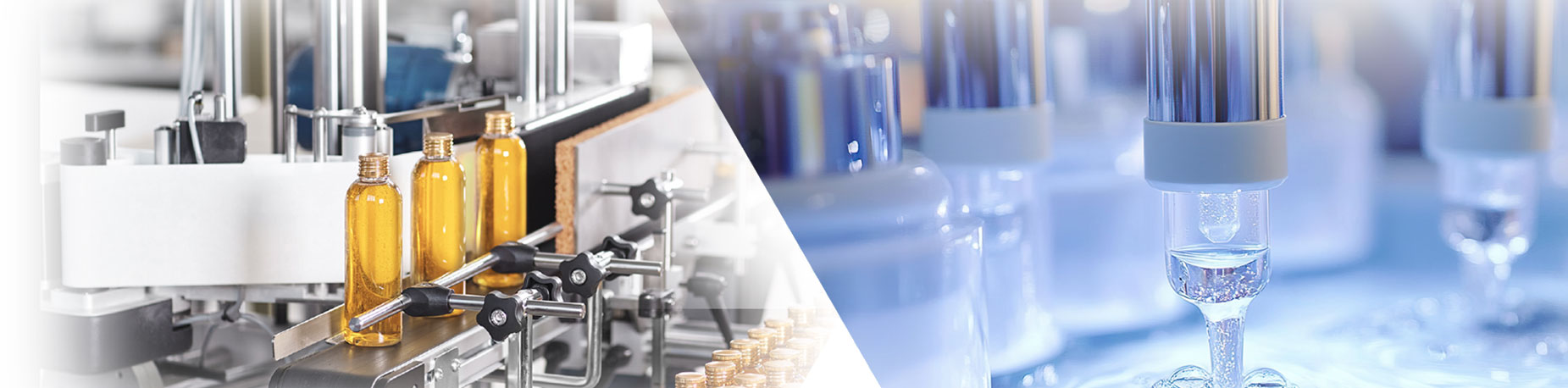
Branding, formulation, and manufacturing accounted for the majority of the beauty market in the past, but it has been rapidly redefining itself through technology, biomedical technique, and sustainable value. The development of emerging materials, Artificial Intelligence (AI), personalized experience, and low-carbon supply chains has become the driving force for industrial upgrading.
According to NielsenIQ’s State of Beauty 2025 report, the global beauty and personal care market grew by 10% over the year, with the Asia-Pacific region leading at an impressive 14.3% annual growth rate. Grand View Research also indicated that the global beauty market reached USD 295.95 billion in 2023 and is expected to expand to USD 445.98 billion by 2030, representing a compound annual growth rate (CAGR) of 6.1%. The Asia-Pacific region accounts for roughly 45% of this market, driving the growth momentum. Overall, consumers’ expectations for products have shifted from purely cosmetic considerations to a balance with effectiveness and value.
The Developing Trends of the Global Beauty Industry
In recent years, as the technology has matured and clinical validation has become more widespread, technologies such as exosomes, stem cells, and peptides have been increasingly applied in skincare and skin repair fields. These have shifted product functionality from cosmetic enhancement toward skin regeneration and health management. Leading Western and Asian brands have invested heavily in this area:
- L’Oréal and Estée Lauder have established dedicated biotechnology research departments focused on cellular regeneration and DNA repair.
- Shiseido and POLA Orbis concentrate on exosome signaling and skin microbiome balance.
- Amorepacific leverages yeast fermentation and peptide delivery technologies to develop medical-grade skincare formulations.
Biomedical R&D has thus become a crucial driver of value creation among major global beauty brands.
Simultaneously, AI and digital technologies are reshaping the ways brands interact with consumers. International leaders such as L’Oréal, Sephora, and Coty have widely implemented AI-driven tools for skin analysis, virtual try-ons, and personalized formula design. These technologies analyze user data to accelerate product innovation and optimize marketing efficiency. The application of AI technology not only enhances the efficiency of product design but also enables brands to seize real-time consumer behavior in global markets, reinforcing engagement and user experience.
Furthermore, sustainability and clean beauty have become the consensus in the global industry. European and American companies such as Unilever, LVMH, and L’Oréal Group have set goals consecutively for carbon neutrality and eco-friendly packaging. Similarly, Asian corporations such as Shiseido and Kao are developing biodegradable formulas and recyclable packaging materials. As the ESG (Environmental, Social, and Governance) evaluation mechanism becomes a part of a brand’s competitiveness, more consumers are willing to pay a premium for environmental protection and sustainable value.
In summary, three interconnected core forces are emerging in the global beauty industry: raising product value through emerging materials, enhancing market efficiency and the innovative experience through AI, and applying sustainable beauty to create added-value for the brand, and all these core forces drive the industry into a new era of high-value utilization growth.
Taiwan’s Beauty Industry: Aligning with Global Trends
Amid prevailing global trends in technology and consumer consumption, Taiwan is seeking international participation in three primary fields—AI technology, emerging material applications, and climate-adaptive, sustainable R&D—transforming from an OEM manufacturing base into a new stage of brand co-creation in research.
I. AI and Digital Technology Innovation
Perfect Corp., Taiwan’s first SaaS (Software as a Service) company listed on the New York Stock Exchange (NYSE), is a global leader in digital beauty transformation. By leveraging Generative Artificial Intelligence (GAI) and Augmented Reality (AR) technologies as a foundation, the company supports the development of virtual try-on, skin analysis, and personalized recommendation system. With adoption by major international groups (including Coty, Estée Lauder, CHANEL, and Shiseido), Perfect Corp. aims to transform customized experiences and online sales in the global beauty market, a testament to Taiwan’s technical influence in the global AI-beauty industry.
II. Emerging Material Applications
BIONET Corp. has expanded into the exosome market from stem-cell and genetic testing, developing into a global R&D and OEM platform with its AI Exosome Foundry. The foundry provides creative services to integrate stem-cell and plant-derived exosome technologies to create active ingredients targeting anti-aging, brightening, and scalp care. BIONET’s partnerships with international brands have further strengthened Taiwan’s position in the high-value beauty material segment.
III. Sustainability and Climate-Adaptive R&D
Taiwan Kiss Me Co., Ltd. has drawn inspiration from Taiwan’s humid and subtropical climate to develop a new “T-Dimensional Beauty” concept for the Asian market. By establishing a climate beauty R&D center in Taiwan that combines AI-based skin databases with climate modeling, the company creates locally tailored products suitable for humid environments, showcasing Taiwan’s innovative capacity in regional skin and climate research.
In addition, through the Taiwan Beauty Valley alliance—a national beauty industry ecosystem alliance that integrates raw materials, formulations, OEM/ODM production, distribution, and technology platforms—Taiwan collaborates closely with France’s Cosmetic Valley, the world’s largest beauty consortium led by the LVMH Group, propelling Taiwan’s capabilities onto the global stage.
Conclusion
The global beauty industry is entering a new era driven by technology, biomedicine, and sustainability. Biotechnologies such as exosomes and stem cells are shifting skincare from surface enhancement to deep repair and regeneration, while AI application is transforming consumer interaction, product development, and marketing. Meanwhile, sustainable beauty has become both a brand value proposition and a market entry requirement.
With strong foundations in biotechnology, AI algorithms, and Contract Development and Manufacturing Organization (CDMO) services—alongside policies support from the Regenerative Medicinal Act and Regenerative Medicinal Product Act passed in 2024—Taiwan is accelerating its innovation in new materials development. These advantages not only strengthen collaborations with international brands but also position Taiwan as a global hub for smart beauty R&D and innovation, connecting the Asian and global markets.
Source: Industrial Technology Research Institute (ITRI) Industry Service Center Research Team